Showing posts with label soccer. Show all posts

Sunday, June 24, 2018

Some light reading for a Sunday morning

Here are a few non-law related articles I've come across recently that I found quite interesting...

First, you've heard at least one of your relatives, classmates or co-workers comment that all Asian people look alike. If we take a look at how well people can identify folks of different races or ethnic groups, there is more than a little truth in the statement. We know, for instance, that a white witness is less likely to pick the differences out among a lineup of black or Latino males than a bunch of white guys.

In  preparing for their World Cup opener, the South Korean team tried an experiment to see just how well white folk (Swedes, for instance) could tell the difference among Korean soccer players by switching numbers in their World Cup warm-up games.

Back when I was in high school, ESPN was still undergoing birthing pains. If you watched the channel's update in the morning to see what was on during the rest of the day you could feel their pain, too. From tractor pulls to Aussie Rules Football to lumberjack contests and everything in between -- except for live sporting events from the NFL, NBA, MLB or NCAA.

Back in the early 80's I was a big boxing fan. ESPN teamed up with the ever-corrupt Top Rank, Inc. (headed by Bob Arum - who only looked honest when sitting next to his main competitor, Don King). They put together a live weekly boxing show called Top Rank Boxing that featured a bunch of up-and-comers and soup cans. One of the most popular fighters was a New Jersey middleweight names Bobby Czyz. His career didn't quite work out as expected. Here is the story of how boxing chews up and spits out fighters.

I'm no Aggie, but I'll be one of the first to admit that Johnny Football was one hell of a college quarterback. I still remember sitting on my brother's sofa that Saturday afternoon when A&M dealt a beatdown to Alabama in Tuscaloosa. Damn, could that kid ball.

Unfortunately, being coddled all his life because of his talent didn't do Johnny Manziel any favors in the maturity department. His career in the NFL never got off the ground because he couldn't stay out of trouble - and without a silver-haired coach or big money boosters to shield him, his foibles played out on ESPN and TMZ on a regular basis. I think his decision to leave college early was one of the worst decisions he could have made -- he needed some more time to mature before going off on his own.

Johnny Football hit rock bottom and now he's trying to climb out of the hole he dug one step at a time. Here's a look at his most recent comeback. And, just as I wanted Vince Young to return to the big stage, I hope Johnny makes a return one day. Kids with that much talent deserve a shot.

Monday, July 14, 2014

Final thoughts on the World Cup

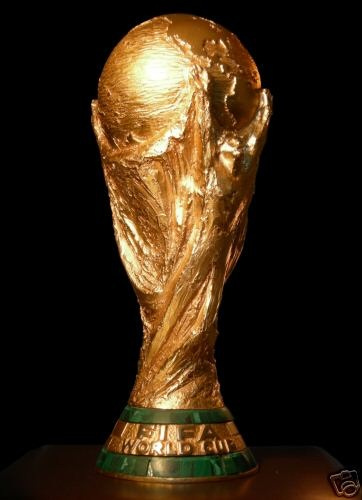
It's over now and Germany gets to display the world's ugliest championship trophy for the next four years. You would think with the amount of money FIFA extorts rakes in from the World Cup they could afford a proper trophy. But, then again, whenever you start a sentence off with "you would think," it's just going to make you scratch your head.

The better team won yesterday - as painful as that is for me to write. This was not your father's German soccer team. This was a possession-oriented side that passed the ball on the ground and didn't rely on long balls and crosses to score goals. Dare I say it, they were actually fun to watch.

Argentina may have had the best player in the tournament but they suffered from out-dated tactics and an over-reliance on Lionel Messi. I don't care how spectacular a player he is, you can't design your attack on just putting the ball at his feet. The team had plenty of offensive weapons who were under utilized and seemed to be an afterthought. Messi's great, but he can't carry a nation on his shoulders. Having said that, the Argentine defense was unbelievable throughout the tournament (with the exception of the meaningless Nigeria game) but all it took was one defensive lapse to cost them the title.

While the football was great over the past month I do wonder what the long term costs of putting on the tournament will be for Brazil's poor and working class. The stadiums that were built across the country are not going to create any long term economic development. If you buy the hype and think otherwise, just drive down South Main by the football stadium and see if it looks any different than it did 15 years ago.

Football used to be the sport of the working class. But not so with the World Cup. It's a playground for the wealthy from around the world. Despite the billions of dollars the Brazilian government diverted from social programs, the vast majority of Brazilians couldn't afford to buy a ticket for an event they, in essence, paid for.

In four years Russia will host the World Cup and the logistical nightmare of stadiums that are thousands of miles apart. Unlike this year's tournament where all the games were played during our daylight hours, in 2018 we will once again have to deal with games airing in the middle of the night. I enjoyed this year's tournament but I know I won't be seeing much it in four years time.

Then, in 2022, the FIFA's most monumentally stupid idea will take shape. Thanks to rampant greed and corruption, the tournament will take place in the soccer hotbed of Qatar. Should it go forward the tournament will have to be moved to a cooler time of the year (all relative, of course) due to the blast furnace that is the Qatari summer. I'm willing to lay odds right now that we will see a football player burst into flames in the middle of a game. But then, hey, it's all about the money.

Wednesday, July 2, 2014

End of the road in the World Cup

Yesterday the dream of a World Cup trophy died for the United States with a 2-1 loss to Belgium. The US performance has been described as gutsy and gritty. In the soccer world those are euphemisms for teams that were overmatched and outplayed. The US team is completely bereft of creativity in the midfield. They are not capable to maintaining possession and dictating pace. Until those deficits are addressed, the US will always be an underdog in the World Cup.

The style of play for the US is very reminiscent of England's style for most of the last 50 years - at least until an influx of foreign players in the Premier League caused English sides to realize there's more to soccer than launching long balls and crosses all day long. So long as the US relies on guts and grit its results in the World Cup will be similar to that of England - no trophies.

The one bright spot yesterday was US goalkeeper Tim Howard, making what may have been his last start for the national team. Mr. Howard made 16 saves - a World Cup record. He deserves combat pay for his performance. He was the only member of the US team who deserved to be on the same field with the Belgians. Unfortunately, if your game plan is to stand around and let the other team take target practice on your keeper, you have no margin of error.

We'll have to wait and see if anything changes over the next four years.

In the meantime, Juliet Macur penned this wonderful article in the New York Times about the legacy of sports stadiums after the fans have left. These palaces of sport are built using hundreds of millions of dollars of public money and then sit empty afterward - relics of crony capitalism.

Many of these arenas will be vacant after the games have left. In most of the cities there aren't enough supporters of local soccer teams to fill the venues for ordinary league games. In some cities there aren't any teams that are willing to pay the astronomical rents to use the stadiums.

At the same time FIFA (the world governing body for soccer) rakes in billions of dollars from the World Cup and washes its hands of the aftermath of rampant graft and corruption.

Over the next four years Russia will be next to spend public money on stadiums that aren't needed and will sit unused after the tournament is over. This is on top of the billions of dollars thrown away on the Sochi Olympics earlier this year.

As I've said before, if sports stadiums are the engines of economic development as supporters claim them to be, there should be problem lining up private investors to put their money into the projects in hopes of making massive profits on the back end. The fact that these stadiums are built using nothing but public funds should tell us everything we need to know about the myth of stadium construction.

The working class and poor folks in Brazil are learning that lesson first hand.


Friday, June 27, 2014

Thoughts on the World Cup

Enough about the law for now. Here are a few observations about the group stage of the World Cup.

Luis Suarez may very well be the best striker in the world but he has got a serious problem that needs to be addressed. He has now been suspended three times for biting another player. The latest ban is for four months and nine international matches. I can't even being to imagine what was going through his mind, but biting someone during a World Cup match is beyond stupid. While the referee might not have seen it, there are so many cameras out there that someone was going to. Little children bite because they don't know better. Grow up, Luis.

This edition of the World Cup has a very Latin flair to it. Seven of the sixteen teams that advanced to the second round are from Central and South America. And then there's the United States. When you factor in two teams from Africa, you end up with less than half the remaining squads coming from Europe. The two biggest surprises have to be Costa Rica and (the suddenly Suarez-less) Uruguay. Who would have thought that neither England nor Italy would've survived the group stage? I must say, however, that one of the things I'm going to miss about the rest of the World Cup is watching England find new ways to lose.

The United States has some serious work ahead if they want to be serious contenders for the trophy. Until the US can develop midfield players that know how to play possession soccer and who can create goal scoring opportunities through creative passing, we will be left just hoping to get out of the group stage. Against Ghana the midfield was non-existent, serving as nothing more than a way station from the back line to the strikers up top. In a game in which possession of the ball was crucial, there was no one in the middle that seemed to know how to do it. While they looked better against Portugal, against Germany in the monsoon the midfield reverted to form and the team showed a complete lack of ideas on what to do on the pitch.

Lionel Messi has been nothing short of superb for Argentina. He has demonstrated just what a goal-poaching striker should be. His goal against Iran in stoppage time of a scoreless draw was spectacular. His goals against Nigeria were remarkable. The first was the perfect example of what a striker does. He was in the right place at the right time when the ball caromed off the post and he drove it into the net. Against Iran he did little for 90 minutes but when he got his foot on that ball in stoppage time he made the world forget that he had, in essence, been kept out of the game by the Iranian defenders. That's what the best strikers do - they can be invisible for much of a game but when that opportunity comes, they pounce on it.

Friday, June 20, 2014

The two faces of the World Cup


I had to wait until my girls went to bed before I could finally sit down and watch the Uruguay-England match from the World Cup. Watching Luis Suarez put those two balls in the net was well worth the wait. I haven't much doubt that Luis Suarez is the best striker in the world. Just watch what this team did against England and compare that to the debacle that was their opener against Costa Rica and you can't help but think Suarez is the best.

But the story of this World Cup isn't just what's happening on the pitch. The real story is what's going on away from the cameras and media. The Brazilian government has sold its soul to host both the World Cup and the Olympics and it's the poorest of Brazilians who are paying the price.

For those of y'all who have been enjoying the football, here's an interview Dave Zirin gave to Amy Goodman on Democracy Now! on Thursday in
which he puts the World Cup in its proper perspective.

Tuesday, June 10, 2014

The beautiful game ain't always so beautiful

As if the rampant corruption in international soccer isn't enough to get folks to sit up and take notice of how money greases FIFA's skids, yesterday I ran across this article on ESPN about the 1978 World Cup in Argentina.

In 1976 the military staged a coup in the midst of the chaos of clashes between leftist guerillas and right-wing paramilitaries. Much of the populace welcomed the coup at first - until they realized the terror and repression that would follow. The 1978 World Cup was used by the military junta to justify their reign of terror. To this day there are many in Argentina who would rather forget about the national team's triumph in 1978.

While the World Cup was being played on pitches across the country, thousands of political dissidents, leftists, trade unionists and activists for the poor were kidnapped and placed in secret prisons where they were tortured and killed. There are thousands of people across the country who don't even know who there parents were because the military killed their parents and gave the babies to colleagues.

Meanwhile, in Sao Paolo, striking subway workers in have threatened to continue their strike through the rest of the week - which would provide some serious headaches for World Cup organizers and fans. In response, local police turned against the striking workers firing tear gas in an attempt to break up the protest.

The government controlled subway operator announced that some 60 of the striking workers had been fired. And this from a socialist-leaning government. So much for the workers of the world speech - now it's all about the filthy lucre from large multi-national sponsors.

Finally, here are a few problems FIFA, the Brazilian government and international broadcasters would rather you not take notice of. But, hey, it's just a game, right?

Monday, June 9, 2014

World cup of corruption

We are now just days away from the opening match of the 2014 World Cup soccer tournament in Brazil. But attention has been drawn away from the matches because of the rampant corruption that takes place behind the curtains erected by FIFA - the governing body of world soccer.

In Brazil the government spent millions of dollars on soccer stadiums and infrastructure instead of spending it on education and poverty eradication. Protesters have taken to the streets in recent weeks to denounce the government's choice of priorities. Even Pele, the world's most famous soccer player (who was also an apologist for the right-wing military dictatorship that ran Brazil until the 1980's) has railed against the government's misplaced priorities.

Meanwhile the 2022 tournament, awarded to Qatar, is awash in controversy over backroom deals and corruption that led FIFA to award the tournament to nation with no soccer history (and one in which temperatures during the summer get well into triple digits). The Qatari government is also having to answer questions about hundreds of foreign workers who have died during the construction of the stadiums and associated infrastructure.

This past week three major World Cup sponsors - Adidas, VISA and Sony - issued a statement outlining their concerns about the goings-on with FIFA. While the sponsors may have some questions about the way in which FIFA operates, it is unlikely that they would raise too much of a stink because of the untold millions of dollars each pockets for its role in the tournament.

So, while you enjoy the soccer on the pitch, don't turn a blind eye to the price of corruption that lies just beyond the stands. Many will suffer for the benefit of a few people who will pocket a share of the billions of dollars the World Cup generates. Soccer may be called the beautiful game - but it's really nothing more than a cesspool of corruption and exploitation.

Monday, August 5, 2013

Has it really been five years already?

Today marks a couple of landmarks in the world of The Defense Rests. It was five years ago today that the first post went out across the interwebz. And this is my 2,000th post on this blawg. So, today we won't talk about the law; instead we will talk about two of my favorite subjects - baseball and soccer.

First we go to the diamond where today is judgment day for Alex Rodriguez. Mr. Rodriguez, for those of y'all who don't keep up with such things, was implicated in the latest drug scandal to hit baseball. His name was found in records belonging to the Biogenesis clinic in Florida. Ryan Braun of the Milwaukee Brewers (who escaped punishment just a year ago) has already agreed to a 65 game suspension that will keep him off the field for the rest of the 2013 season.

Mr. Rodriguez, who has denied any wrongdoing, has refused to negotiate the terms of a suspension with MLB. As a result he is looking at a suspension that could last anywhere from 200 games to life. If he decides to sit down to work out an exit strategy he is likely to sit the rest of this season and all of next season - costing him almost $40 million.

His employer, the New York Yankees, are, ironically, hoping that the commissioner will drop the hammer on A-Rod as that would free up a lot of cash in the Bronx.

Either way, Alex Rodriguez' career is coming to an end. He is 38 years old with lots of miles on his body. He is coming off hip surgery in the off-season. He, and his salary, are an albatross around the neck of the Yankees.

Now I've questioned many times before this focus we have on players who took performance enhancing drugs. Sports is big business. Networks buy up broadcast and cable rights for hundreds of millions of dollars. They want a lot of eyeballs watching those games so they can charge their sponsors and arm and a leg for the privilege of airing a commercial or two during the game.

No one in baseball seemed to care back in 1998 when Mark McGwire and Sammy Sosa were chasing history. The aura of the home run chase served to restore the luster the game had lost when the World Series was cancelled in 1994. Mr. McGwire looked like a freak of nature - nothing like the kid who began his big league career in Oakland.

As a result of their cheating, neither McGwire nor Sosa is likely to ever be enshrined in Cooperstown.

Then along came Barry Bonds, whose head kept getting bigger and bigger (literally) as a result of the drugs he was using to fuel his pursuit of Hank Aaron's all-time home run record. Despite the fact everyone knew Bonds was the biggest cheat in baseball, we were still subjected to the sight of Hank Aaron recording a message congratulating Mr. Bubblehead on becoming the new home run king.

Bonds was never suspended and his records still hold. It is unlikely that he will be invited to the Hall of Fame anytime soon, either. The only consolation in all of this is that while everyone who follows baseball knows what 755 means, very few folks can remember how many homeruns Bonds hit.

As the extent of drug use became clear, baseball decided to clean up its act. The owners and the players' union worked together to create a new drug policy that called for mandatory suspensions for players who tested positive for a banned substance. But, none of the players caught up in the Biogenesis scandal tested positive for anything - the evidence against them consists of medical and billing records and the statements of the "doctor" who ran the clinic out of a strip mall.

So, is it fair that Mr. Braun, Mr. Rodriguez and the other players are being punished for their alleged drug use while Bonds, McGwire, Sosa, Clemens and others weren't? No, it's probably not. Of course the problem is that back when the drug scandals began, there was no drug policy in baseball and now there is. Mr. Rodriguez cheated knowing full well that he was cheating and what the possible penalties were.

Drugs brought baseball back from the brink of oblivion and the owners and commissioner turned their heads the other way so long as the money was pouring into the coffers. Now, with baseball being richer than it has ever been before, MLB wants to crack down on the practices it condoned 15 years ago.

On the other side of the world, in Qatar to be exact, a young Ecuadoran soccer player, Christian Benitez died of heart failure shortly after playing in his first match for his new club in Qatar. His death has raised serious questions regarding FIFA's awarding of the 2022 World Cup to the Arab emirate.

FIFA officials are now, all of a sudden, worried about the consequences of playing a soccer tournament in a country in which temperatures exceed well over 100 degrees during the summer. Even Sepp Blatter, the corrupt head of FIFA, is considering moving the tournament from the summer to the winter to avoid the searing heat (nevermind the havoc that will play on European soccer leagues). With all the hand wringing after Mr. Benitez' death you would think that Qatar was lush paradise turned into an arid desert wasteland in the last few months as a result of global warming.

The truth is that no one in FIFA gave a flying fuck about the weather and playing conditions for players or fans. The decision was made based on who promised to make FIFA the most money - and Qatar, a country rich in soccer tradition (or not), promised the moon.

Friday, March 29, 2013

A lucky night in Mexico City

Had you done nothing but read accounts of the USA-Mexico soccer game the other night, you would have thought the Yanks made one sustained courageous stand against El Tri and were triumphant for picking up a point in their qualifying pool as a result of the 0-0 draw.

I happened to watch the game and the reality is the USA got their point not because of their tactics, but in spite of them.

The Mexicans controlled possession throughout the game. They took 17 shots on goal while the Yanks took one. The Mexicans had 15 corner kicks (including three in the game's closing minutes) while the USA had all of one.

And before anyone praises the defensive effort, I would ask that you watch a replay of the match. If you do you will see that the Mexicans missed three or four shots that should have found their way into the back of the net. The Yanks also got lucky in that there were two incidents that could have resulted in penalty kicks that weren't called. Had any one of those balls found its way into the goal, we'd be reading stories proclaiming doom on the team's chances to reach the World Cup in 2014.

In a game in which one bad bounce can spell the difference between a satisfactory result and a loss, a team can't afford to pack it in on defense and completely ignore the final third of the pitch.

As things stand the Americans can't afford to get into a shootout with anyone because they have no firepower. And, should they fall behind, it's going to be a long, hard slog to get things even again.

There is little or no creativity in the midfield. There is no one with any killer instinct sitting up top ready to poach any ball coming into the box. There is very little flow between the midfield and the attacking players.

In short, the US national team is in trouble. Jurgen Klinsmann, who was brought in to replace Bob Bradley as coach, has done little to turn this squad into a team that looks like a threat to make it through the group stage in Brazil.

Monday, November 12, 2012

Another season ends and this time I'm happy

Ordinarily this is the time of year I write wistfully about the end of another soccer season and the wait for next year to arrive. This year's narrative is a bit different, however.

For the last six years I have coached my daughters' soccer teams. They both began playing when they were three and I coached them through two years Pre-K and one year of kindergarten soccer. It doesn't seem possible that my oldest just finished up her sixth year of soccer and that my baby just finished her third year.

For the past four years I have been in charge of the youth soccer program at my girls' church. I got involved because I liked the philosophy of the league and the other coaches I worked with. Being in charge takes its toll. The month-long run-up to the season is a massive pain trying to get through registration, forming teams and getting the fields ready for the season.

As a rule, once the season begins the headaches are over. Sure, there's striping fields and unlocking everything on Saturday mornings (and breaking down the fields that night or the next morning). For eight weeks I get to watch a group of kids run around chasing a soccer ball having a good time. It is such a pleasant diversion from reality.

This year, however, was different. Early in the season, as I was sitting on the couch watching the Longhorns play after our morning game, I got a call from the head of the league. There had been an incident at a game. A parent got into an argument with a referee and it got so bad the game had to be halted and the head of the league was called out from her office. Oh, and did I mention it was kindergarten game?

Instead of cooperating with me, the coaches circled the wagons and claimed that the parent was in the right and that the referee and the league had overreacted to the incident. Not once did anyone associated with the team acknowledge that the parent had stepped over the line. I ended up suspending the parent for one game for his actions and the coaches for one game for not cooperating. I thought the matter was over. Oh, did I mention the league wanted to kick the team out as a result of the incident and the reaction afterward?

Then last week a series of e-mails began circulating claiming that the parents and the coaches were mistreated and that the entire incident was a "misunderstanding." The e-mails circulated among parents and administrators at the church and school. One parent, who works for a prominent Houston attorney with her husband, sent an e-mail that seemed to be a veiled threat to pursue legal action. Oh, did I mention that the coaches sign an ethics agreement that coaches, parents, spectators and fans are to respect and obey the referees?

I was astounded. No one, including the administrators, seemed to understand the problem. No one seemed to grasp that the message being sent to the kids was there is no need to accept responsibility for your actions if you raise a big enough stink. Oh, did I mention that in the six years I've been involved with the league there has never been an incident like this one involving any team from my girls' church? And did I mention that the team involved was made up of kids who went to the elementary school down the street?

I have volunteered my time over the last six years to ensure that these kids can play soccer. But those days are over. I have better things to do with my time than deal with this group of parents and their sense of privileged entitlement. I have resigned my position.

I have never before been so glad that a soccer season was over. And that's sad.

Monday, March 19, 2012

Book review: Up Pohnpei - A quest to reclaim the soul of football by leading the world's ultimate underdogs to glory

I was minding my own business the other day while driving around in the car. I was listening to a BBC show when they began interviewing Paul Watson, an Egnlishman, who had just written a book about going to Micronesia to coach a soccer team. It sounded like a fun story but, darn the luck, I was actually driving and couldn't grab a pen to write anything down.

Once I had the chance I got on my phone and tried to pull the book up on Amazon or Google but I didn't catch the author's name. The name of the island sounded like "Pompey" on the radio. All I could find when I typed in Pompey and football were scores of books about the Portsmouth soccer team in England (type it in yourself and you'll find out why).

On the verge of giving up I happened to type in "Guam" and "Pompey" in the search box. And then I found my mistake. The name of the island was Pohnpei. It was back to Amazon and, a few moments later, On Pohnpei was on my smart phone.

The book is a fun read. Mr. Watson and his friend Matt were huge football fans. Mr. Watson's dream was to play on England's national team. Unfortunately he wasn't good enough. On a lark, he and Matt decided to look for the worst national soccer side they could find to see if they could get on the field. Pohnpei was, by all accounts, the worst national side in the world.

But their dreams of playing for Pohnpei were dashed when they saw the requirements for obtaining citizenship. So, instead of playing on the pitch, the mates decide to coach.

On the one hand, On Pohnpei is the story of a determined man trying to build something from nothing. He organized a football league on the island consisting of five teams. From those five teams he assembled a national team. The book chronicles the challenges he faced in getting his team ready to play competitive football. It's an inspirational story that makes you believe that if you want something bad enough, you can achieve it.

On the other hand, On Pohnpei is a story of imperialism. Both political and cultural. Pohnpei is poor and, with very few prospects, its best and brightest flee for the opportunities offered elsewhere. Mr. Watson is the hero in white who comes to rescue the backward islanders. If the natives will just listen to the interloper, he will deliver them into paradise.

I go back and forth. I enjoyed the book and it was quite refreshing to view the world of football from outside the prism of the European game.

Tuesday, February 14, 2012

Innocent unless... yeah right

John Terry was, up until earlier this month, the captain of England's national soccer team. He was stripped of the captaincy because he has been charged with "racially abusing" a player from another team back last October.

The head of the F.A. (the body in charge of English soccer), David Bernstein, made the announcement after Mr. Terry's trial had been postponed to July. At the same time, the F.A. said that its move was not implying any guilt on Mr. Terry's part in the alleged incident.

Really?

Now I'm not a fan of England's particular style of soccer. Rather than seeing balls launched downfield in the hopes that a striker can catch up to it, I prefer the speed and agility of the Spanish game. Deft touches, creative attacking and possession-oriented play is much more up my alley that the "Route One" football preferred in England.

But that's all beside the point here. We could talk about the absurdity of making it a crime to utter unfriendly speech. We could talk about how you really cannot legislate thought. We could talk about how it's intellectually dishonest to punish those who speak more harshly than those who just think, or legislate.

I'm more interested, however, in how we treat those accused of committing a crime. We are told that everyone is presumed innocent unless proven guilty. We also know that's a creative fiction. The defendant in a criminal case is rarely, if ever, presumed innocent.

And it doesn't matter how many times you tell a panel of jurors that your client is innocent and that the only presumption the jury is allowed to make is that the defendant is innocent. The judge treats him as if he's guilty - high bonds and stringent bond conditions. And don't forget the very act of calling your client "the defendant" in front of the jury - we certainly can't allow those jurors to appreciate the fact that your client is every bit as human as they are.

The leadership of the F.A. assumes Mr. Terry is guilty. Why else would they strip him of his captaincy. A captaincy that was awarded to him by the players on the team? The choice of captain should not be a political matter. The choice of captain should be based on who is best suited to lead the team on the field. And stripping Mr. Terry of his role as captain of the national team sends the message to the nation that he did something wrong. It sends the message that he's guilty. It tells every potential juror that the people running the national team believe that Mr. Terry did exactly what the government has accused him of.

And that's one way to poison the jury pool.

Saturday, January 21, 2012

This bud's for you, or maybe it isn't

Outside the United States soccer is the sport of the working class. Tales of violence at soccer matches around the world are legendary. Violence used to be a problem at soccer matches in Brazil. That is, until the government banned the sale of alcohol at soccer stadiums in 2003.

The measure seemed logical. Rowdy, passionate fans and alcohol don't make the best of combinations. The ban has had limited success since there is no ban on the consumption of alcohol outside the stadiums.

FIFA, the corrupt governing body of world soccer, awarded the 2014 World Cup to Brazil. But now there are problems.

The Brazilians wanted to set aside some discounted tickets for students and seniors. FIFA didn't like that idea as it would reduce the filthy lucre that Sepp Blatter and his cohorts can take back home to Europe. But the biggest dispute has to do with alcohol.

Budweiser, maker of piss water beer, is a big (shall we say huge) sponsor of the World Cup. And, as a major sponsor, carries a bit of weight. It seems that the folks out in St. Louis (or wherever the company is headquartered after its sale) aren't too terribly happy about the prospect of no alcohol sales at the stadiums across Brazil. And Mr. Blatter, always happy to get down on his knees and do the bidding of FIFA's sponsors,  has informed the Brazilian government that there will be beer sales at World Cup venues - Brazilian laws be damned.

Now once upon a time sport was just that - sport. Now it is a business and the actual sporting event is but a marketing device for any corporation that wishes to peddle its products to the viewers. It is beyond absurd that FIFA is demanding that the Brazilians serve alcohol at World Cup venues.

Now I understand the network and cable folks view sports as the ultimate reality show. I also know that there are quite a few universities that are more than happy to let the broadcasters tell them when and where to play. But that doesn't make it right.

I hope the Brazilian government holds its ground and refuses to sell out for a beermaker. But I'm also fairly certain that that is exactly what will happen. And what message does that send to the Brazilian people? And what message does that send to other multinational corporations who don't like the laws in a particular country?

FIFA and Budweiser knew the rules before the tournament was awarded to Brazil. They need to learn to live with it. After all, it's all about the (beautiful) game.

Friday, December 30, 2011

From a field of nightmares to a field of dreams


As we wind down the old year and get ready to crank up the new one, the people in Afghanistan are still trying to extricate themselves from the nightmare that was the Taliban regime. And part of that transformation is taking place inside a soccer stadium.

Ghazi Stadium in Kabul is to be the home of the Afghanistan national soccer team.

During the days of the Taliban, Ghazi Stadium was where the regime carried out public executions.


Daud, 40, a driver who only wanted to give his first name, was at the stadium in 1999 when he witnessed the execution of a woman called Zarmeena, who was accused of killing her husband. 
Dressed in a blue burqa, she was made to kneel on the field. 
"The Taliban got the Kalashnikov, put it behind her head and shot her two times. She fell down on the ground," Daud said. "The crowd went very quiet. It was a strange and dangerous atmosphere. People were shocked and scared. Sometimes I remember that woman — I even dream about it." 
But he said he hoped that the stadium, once dirty and littered with bullets, now would be a symbol of hope in the country 
"Now the stadium is 100 percent changed," he said.

Sports can divide us, but they can also bring us together. Although the reopening of the stadium is more symbolic than tangible, it is a sign that normalcy may be returning to the country.

Play ball!

Tuesday, September 27, 2011

Are you ready for some futbol?


Oh, once again our Saturdays are filling with rushing from field to field across the west side of Houston for soccer.

I love the sight of those fields as the sun rises on Saturday morning. It's quiet. It's peaceful. In just a couple of hours, however, chaos will reign as the wee weekend warriors take the pitch.

This season marks my fifth year coaching the little ones. I watched with great pride as my oldest daughter took the field in the afternoon. I coached her the first three years she played and it's amazing the player she has become. My little one has been dribbling a soccer ball since she was two and has mastered the drills we go over in practice.  But when it comes to game time she's a bit shy and scared at the prospect of a sideline full of parents watching the game.

I've told her just to focus on the ball, the other players and me and to ignore everything else around her. But I know for some that's easier said than done. She'll be there by the end of the season - I just know it.

For all of the headaches involved in organizing registration, placing kids on teams and dealing with parents upset about whose team their child is on, these next eight weeks are pure gold. All of the stress is worth it when you look into the smiling face of a child happy to be wearing a uniform and chasing a ball around the pitch.


Tuesday, September 13, 2011

I'll take a little cheese with my whine, please

Now, if I might be permitted the indulgence of a little whine...

I coach youth soccer. This is the fifth year I've coached a team of kids six years old or under. I am also the soccer commissioner at the church my daughters attend. I volunteer my time to get the fields ready to play, to run registration and to organize teams (14 this season).

The past few weeks I have been attempting to run a law practice, be a good husband to a wife who watched her father die and get things ready for the upcoming soccer season.

Along the way I have to deal with parents who want their little angels on the same team with their BFF's. I have to deal with coaches who aren't willing to split teams up in order to field enough teams to ensure kids have adequate playing time. I have to recruit parents to volunteer a couple of hours a week so we have enough coaches for the teams. And I have to arrange practice times so that we don't end up with two teams on the same field at the same time.

When I was a kid playing soccer we didn't request whose team we wanted to be on. We signed up and were assigned to a team. You might know some of the kids on the team and you might not know others. In the end you made some new friends.

The first year my oldest daughter played she knew one other kid on her team. She made friends with the other kids and has been playing soccer with some of them for the past three years. She did fine. She never complained that so-and-so wasn't on her team. She just went out and played.

But apparently the notion that kids can play with other kids they don't know and, not only survive, but make new friends, is a bit out there for some parents today. They get upset if their child isn't on the same team as their best friend or their classmates. They get upset if the guy down the street isn't the coach. It would be one thing if it were just a couple of parents - that I could handle with ease. But no. It seems that everyone walks around thinking the entire program needs to revolve around them and their kid's need to play only with their friends or classmates.

How does such behavior do any of the kids any good? When they go to school they will be placed in classes at random. They won't get to sit next to their best friend. Heaven forbid they have to sit next to someone who's different than they are.

Athletics, like school, is as much about socialization as it is anything else. Sure, by the end of the year the kids will have developed just a little bit more as soccer players. But they will also have developed a better sense of sportsmanship and what it means to be on a team. And, at this early age, that's far more important that whether their team wins or not.

Everyone wants their kids to live in an antiseptic bubble. Well, guess what. The world ain't like that. Kids scrape their knees, they fall off their bike, they get dirty, they get scared. And, through it all, they mature and learn how to cope with adversity and disappointment. They learn to rely on their own intuition and skill.

I guess we could baby them all and let them grow up to become little lemmings that just accept it when the government decides it's time to take away another freedom in the name of greater security. And you wondered what ever happened to the Fourth Amendment.

Tuesday, November 16, 2010

See ya' next season

And so it ends.

Another soccer season has come and gone. It seems like just yesterday we were gathered together laying out fields and putting together rosters. Now, as the chill of autumn pushes the warmth of summer away for a few months, I have more time on my hands.

No more soccer practice on Thursdays. No more prepping fields on Fridays. No more games on Saturdays. No more taking down flags and goals on Saturday nights. No more watching my three- and four- and five-year olds learning new skills and honing their old ones.

For four months out of the year I run the soccer program at my daughters' church. It's a lot of work - and a lot of headache. It's also a lot of fun.

The sight of soccer fields in the early morning hours, before the kids and SUV's arrive, is so calming to the soul. The sight of a youngster finally breaking through and scoring his first goal is inspiring. The sight of my daughters dressed in gold running and playing and smiling is precious.

My dad coached my soccer team the last year I played. He didn't know much about soccer. He had watched us play growing up and decided to be a coach. Looking back, it was pretty cool to play for my dad. He'd leave work early to get home and get us to practice. He did it because he knew playing soccer was something I loved to do.

Over the last four years I've had the opportunity to coach both of my daughters. My oldest played for another coach for the first time this year. To stand on the sideline and watch her play, not as a coach, but as a doting father, was a wonderful experience.

Like everyone else, my dad is getting older and his health isn't as good as it once was. I know that someday he'll be gone, but those memories will always live on -- baseball games, backyard barbecues and coaching.

Monday, September 27, 2010

Let the games begin

This weekend marked the opening weekend of soccer season for my daughters' league. My oldest is beginning her fourth year of soccer while my youngest ran out onto the pitch for the first time on Saturday. As soccer commissioner, or as I like to call it, soccer czar, it's my responsibility to make certain the fields are ready to go every Saturday.

My ordinary routine is to get up before dawn and go for a run around the neighborhood, then wolf down breakfast and head over to the church to unlock gates, put out signs and get everything ready for the morning rush.


There is something uniquely peaceful about athletic fields in the early morning hours before a single player has stepped onto the field. The wet grass, the chalk lines and the flags are all in harmony.


I come back again late in the day to break down the fields and pick up the trash and everything else that was left behind. In the morning there's a feeling of optimism from looking ahead to what promises to be a great day. In the evening it's a tad more somber picking up what's been lost and thrown away.

That being said, there's usually some humor to be found in the evening. This past Saturday I picked up soccer balls and water bottles left behind by the kids (not at all unusual). I also found an umbrella left in the fence (it was sunny and there was no shade on that field). Then I found some odd items: some folding chairs and a fairly new pair of sneakers and socks. I don't understand leaving a chair -- I mean, you were just sitting in it. And the shoes? The strangest find of the day was a set of car keys. How someone managed to leave those laying around beneath the bleachers I'll never understand. I'm thinking walking out to the car and not being able to get in would be a clue that you left something behind.

Sunday, July 11, 2010

A little football on the side?

Later today it will be the short passing game of the La Furia Roja against the possession oriented attack of the men of Oranje in the World Cup Final in South Africa.

Will the Spanish be able to play the skillful game of keep-away they played in the semi-final against Germany or will the Dutch side defend more physically and clog the passing lanes? Both sides have looked out of sorts during this year's tournament, but here they are playing for the ugliest trophy in all of sports.

I predict the Netherlands will suffer a death of a thousand short passes and that Spain will walk off the pitch as champions. In the end I think the Spanish attack will prove too quick and too sublime for the Dutch. The creativity of Xavi and the surgical precision of David Villa will be too much for the Netherlands to overcome.

Monday, June 28, 2010

Problem, what problem?

For the ordinary sports fan sitting at home, the offsides rule in soccer may very well make no sense. For a soccer fan, the rule is crystal clear. For a soccer referee, spotting a player offside should be almost instinctual.
A player is in an offside position if: he is nearer to his opponents’ goal line than both the ball and the second-last opponent (FIFA Laws of the Game, Law XI)
And yet, in front of the entire world and a stadium full of rabid fans, three officials managed to blow (yet another) call in the World Cup when they allowed the first Argentine goal on Sunday.


Amid all of the criticism of the officiating in this year's edition of the World Cup, what has FIFA in its infinite wisdom decided to do to address the officiating? Introduce instant replay? No. Add another official on the pitch? No. FIFA has decided to ban replays from the stadium big screens.

(It's also interesting to note that unlike the video of Landon Donovan scoring the winning goal for the US against Algeria, the video of the first Argentine goal against Mexico has been removed from all websites due to "copyright" issues. Really.)

Unnamed FIFA Official after being asked about yet another example of shoddy officiating in the World Cup.

That's right. FIFA has decided they won't address the actual problem of referees screwing up calls, they've decided the way to resolve the problem is not to replay anything at the stadium so the coaches, players and fans can't see them with their pants down.